 English version to bottom click here
TEMPORADA APICOLA 2023-2024 EN ARGENTINA
16 de noviembre de 2023
En lo que va de la temporada apícola en la Argentina la miel de limón fue un fracaso en Tucumán, al igual que en el sudeste correntino donde el exceso de lluvias malogró la cosecha de miel. Por su parte, el Monte Nativo Cordobés estuvo muy flojo en comparación a años anteriores.
Las escasez de lluvias y las fluctuaciones de la temperatura han retrasado la temporada en el resto del país entre 15 y 30 días, siendo muy gravitantes las bajas temperaturas mínimas en la Pampa Húmeda, Mendoza donde las temperaturas mínimas se situaron por debajo y en algunos casos muy por debajo de la media histórica que se ha establecido entre 1991 y 2020 como período de referencia para determinar las anomalias según el Servicio Meteorológico Nacional en Argentina (SMN).
En lo que a humedad de suelo se refiere, la sequía de años anteriores se prolongó hasta septiembre y en un área significativa hasta octubre. Afortunadamente muchas hierbas de interés apícola brotan y florecen con el primer chaparrón, al menos donde no se esparce glifosato, aún así en muchas zonas hace falta lluvia para la producción de miel.
En el siguiente mapa del SMN se pueden apreciar a la izquierda las precipitaciones durante septiembre y octubre de 2023 y a la derecha la anomalía respecto a la media histórica. Sólo un arco en la zona de la Mesopotamia, pintado de blanco, muestra normalidad en esa estrecha franja, luego hacia el noreste en toda la provincia de Corrientes y en Misiones las precipitaciones estuvieron por encima de lo normal. El resto del país, coloreado de amarillo claro, oscuro y anaranjado muestra que el déficit general de precipitaciones en el arranque de la primavera estuvo en más de 50 mm y hasta 200 mm.

Ya en la primera decena de noviembre el fenómeno se revirtió en gran parte del territorio con mayor concentración de colmenas. En el siguiente mapa del SMN los registros de estos primeros diez días del mes muestran precipitaciones normales o apenas por sobre los valores normales, sin embargo éstas todavía no llegan a compensar el stress hídrico ni satisfacer la demanda del perfil de suelo para la siembra de cultivos de interés apícola como el girasol. Además la evapotranspiración provocada por el viento y ocasionales golpes de temperaturas altas no permiten apreciar un impacto significativo en la vegetación, pero se ha revertido la situación de meses anteriores en la zona central del país. Contrariamente, toda la franja costera del Río Uruguay, en el límite con la República Oriental del Uruguay y Brasil, desde la mitad de la provincia de Entre Ríos hacia el norte, donde el nivel de precipitaciones venía siendo normal o superior a lo normal, está siendo muy perjudicada por el exceso de lluvias en este mes de noviembre.

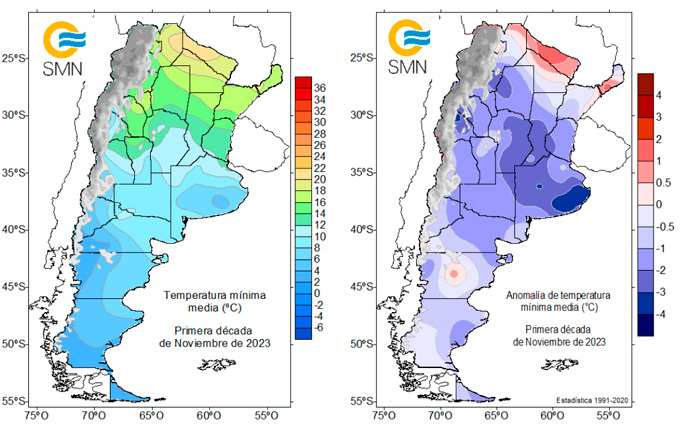
Finalmente, lo que señalabamos al principio, en el siguiente mapa del SMN, nótese cómo las temperaturas mínimas de la primera decena de noviembre señaladas a la izquierda en grados Celcius, están de 2 a 3 grados centígrados por debajo de lo normal lo que sumado a un menor desarrollo vegetativo por el stress hídrico, viene demorando el desarrollo de las colmenas.
Las escasez de lluvias y las fluctuaciones de la temperatura han retrasado la temporada en el resto del país entre 15 y 30 días, siendo muy gravitantes las bajas temperaturas mínimas en la Pampa Húmeda, Mendoza donde las temperaturas mínimas se situaron por debajo y en algunos casos muy por debajo de la media histórica que se ha establecido entre 1991 y 2020 como período de referencia para determinar las anomalias según el Servicio Meteorológico Nacional en Argentina (SMN).
En lo que a humedad de suelo se refiere, la sequía de años anteriores se prolongó hasta septiembre y en un área significativa hasta octubre. Afortunadamente muchas hierbas de interés apícola brotan y florecen con el primer chaparrón, al menos donde no se esparce glifosato, aún así en muchas zonas hace falta lluvia para la producción de miel.
En el siguiente mapa del SMN se pueden apreciar a la izquierda las precipitaciones durante septiembre y octubre de 2023 y a la derecha la anomalía respecto a la media histórica. Sólo un arco en la zona de la Mesopotamia, pintado de blanco, muestra normalidad en esa estrecha franja, luego hacia el noreste en toda la provincia de Corrientes y en Misiones las precipitaciones estuvieron por encima de lo normal. El resto del país, coloreado de amarillo claro, oscuro y anaranjado muestra que el déficit general de precipitaciones en el arranque de la primavera estuvo en más de 50 mm y hasta 200 mm.
Ya en la primera decena de noviembre el fenómeno se revirtió en gran parte del territorio con mayor concentración de colmenas. En el siguiente mapa del SMN los registros de estos primeros diez días del mes muestran precipitaciones normales o apenas por sobre los valores normales, sin embargo éstas todavía no llegan a compensar el stress hídrico ni satisfacer la demanda del perfil de suelo para la siembra de cultivos de interés apícola como el girasol. Además la evapotranspiración provocada por el viento y ocasionales golpes de temperaturas altas no permiten apreciar un impacto significativo en la vegetación, pero se ha revertido la situación de meses anteriores en la zona central del país. Contrariamente, toda la franja costera del Río Uruguay, en el límite con la República Oriental del Uruguay y Brasil, desde la mitad de la provincia de Entre Ríos hacia el norte, donde el nivel de precipitaciones venía siendo normal o superior a lo normal, está siendo muy perjudicada por el exceso de lluvias en este mes de noviembre.
Finalmente, lo que señalabamos al principio, en el siguiente mapa del SMN, nótese cómo las temperaturas mínimas de la primera decena de noviembre señaladas a la izquierda en grados Celcius, están de 2 a 3 grados centígrados por debajo de lo normal lo que sumado a un menor desarrollo vegetativo por el stress hídrico, viene demorando el desarrollo de las colmenas.
ESPACIO APICOLA Nº 141
La cuarta edición anual impresa de la revista Espacio Apícola está en distribución por Correo Argentino para los suscriptores en Argentina y los comercios que la ofrecen en Argentina y Chile.
- Analizamos el desarrollo de la Primera Revisión de las sanciones por dumping a las mieles de Argentina, Brasil, India y Vietnam impuestas por el Departamento de Comercio de los Estados Unidos. Iniciada en el mes de agosto y en pleno desarrollo.
- Mostramos lo que se vio en la Api Expo del 48º Congreso de Apimondia en Santiago de Chile entre el 4 y 8 de septiembre pasado.
- Destacamos la presencia de la empresa argentina MAR-PLAST con tres centros de distribución a lo largo de la República de Chile.
- Artículo sobre Selección y Reproducción. Tema central: zánganos
- Artículo sobre virus en abejas africanizadas del sur de Brasil.
- Artículo sobre diferenciación de mieles de Argentina.
- Avances legales sobre producción orgánica, e Indicación Geográfica de mieles.
Acceda a los resúmenes de la edición 141 AQUÍ.- También puede suscribirse AQUÍ para recibir la revista en formato pdf y para acceder a la Biblioteca Digital de Espacio Apícola con más de 60 ediciones disponibles actualmente online. Unico pago anual equivalente a U$S 20.-
- Analizamos el desarrollo de la Primera Revisión de las sanciones por dumping a las mieles de Argentina, Brasil, India y Vietnam impuestas por el Departamento de Comercio de los Estados Unidos. Iniciada en el mes de agosto y en pleno desarrollo.
- Mostramos lo que se vio en la Api Expo del 48º Congreso de Apimondia en Santiago de Chile entre el 4 y 8 de septiembre pasado.
- Destacamos la presencia de la empresa argentina MAR-PLAST con tres centros de distribución a lo largo de la República de Chile.
- Artículo sobre Selección y Reproducción. Tema central: zánganos
- Artículo sobre virus en abejas africanizadas del sur de Brasil.
- Artículo sobre diferenciación de mieles de Argentina.
- Avances legales sobre producción orgánica, e Indicación Geográfica de mieles.
Acceda a los resúmenes de la edición 141 AQUÍ.- También puede suscribirse AQUÍ para recibir la revista en formato pdf y para acceder a la Biblioteca Digital de Espacio Apícola con más de 60 ediciones disponibles actualmente online. Unico pago anual equivalente a U$S 20.-
Patrocinadores de nuestra edición Nº 141 - Sponsors of our edition #141












 Versión en Castellano, arriba aquí